TVET Students Receive Just GH₵33 For Practicals Annually
|  | |
|
Policy think tank Africa Education Watch has raised alarm over what it describes as grossly inadequate funding for practical training in Ghana’s Technical and Vocational Education and Training (TVET) sector, warning that the situation is undermining the delivery of industry-relevant skills.
In its 2026 First Quarter Education Policy Monitoring report, the organisation revealed that the current allocation for practical training under the Free TVET policy is insufficient to support effective hands-on learning.
“Allocating GHC 33 per student for practicals for a whole academic year does not support industry-relevant skills training, as most TVET schools end up conducting only one practical session a month instead of one each week,” the report stated.
According to the think tank, even the limited practical sessions being conducted are often compromised due to inadequate resources.
“Even the one practical work is highly compromised,” it added.
Africa Education Watch further criticised the existing funding framework, noting that it is modelled after the Free SHS system and fails to reflect the cost-intensive nature of technical and vocational education.
“The current TVET costing framework, which is based on Free SHS, is not fit for purpose, as evidence prior to Free TVET indicates that TVET is at least twice as expensive as general secondary education,” the report explained.
It warned that continuing with the current model risks producing graduates who lack the practical competencies required by industry.
“Continuing with this approach only means providing theory-rich skills training in our schools, a major complaint from industry,” the report emphasised.
The organisation stressed that without urgent reforms to the financing model, Ghana’s efforts to position TVET as a driver of industrialisation and job creation could be significantly undermined.
Africa Education Watch is therefore calling on government to review the funding structure for TVET to ensure adequate investment in practical training, which remains central to the effectiveness of the sector.
Source: citinewsroom.com | |
|
|
|
Eduwatch Kicks Against Proposed College Of Education In Jomoro
|  | |
|
Africa Education Watch has raised concerns over the government’s decision to establish a new College of Education in Jomoro, describing the move as poorly justified and out of step with current educational and labour market needs.
In a statement issued on April 1, 2026, the think tank criticised the proposal, arguing that it fails to reflect prudent prioritisation of limited public resources, particularly amid Ghana’s estimated GH¢16 billion annual education financing gap.
According to Eduwatch, the nearby Enchi College of Education in the Aowin Municipal operates at about 30 percent below capacity due to admission caps introduced by the Ministry of Education in 2022. This, the think tank argues, undermines the rationale for establishing a new college in close proximity.
“Existing capacity at the local level: Jomoro Municipal borders Aowin Municipal, where Enchi College of Education, one of the best in Ghana, operates at 30% below capacity due to admission caps imposed by the Ministry of Education in 2022.”
Beyond the local context, Eduwatch pointed out that the Western Region already hosts four Colleges of Education, alongside teacher training programmes offered through distance learning centres run by the University of Cape Coast.
The statement further underscored a broader national issue, an oversupply of trained teachers relative to demand.
Eduwatch noted that despite a 30 percent admission cap across Ghana’s 46 public Colleges of Education, together with universities such as the University of Cape Coast, University of Education, Winneba, University of Ghana, and University for Development Studies, the country continues to produce more than twice the number of teachers required each year.
“National teacher education excess capacity: Even with 30% admission caps imposed on the existing 46 public College of Education, together with the University of Cape Coast, University of Education, Winneba, University of Ghana, and University for Development Studies, public teacher education institutions are producing more than twice the number of teacher graduates required annually in Ghana, imposing a financial burden on the public purse.”
Source: citinewsroom.com
| |
|
|
|
Alumni Protocol In SHS Placement Is A Step In The Right Direction
|  | |
|
The Executive Director of Africa Education Watch, Kofi Asare, has applauded the government’s initiative to formalise alumni protocol in schools, describing it as “a step in the right direction".
Speaking in an interview on Joy FM’s Midday News on Thursday, April 2, Mr. Asare explained that while alumni protocols have historically existed in an informal capacity, structuring them through official protocols will enhance transparency and accountability.
"This is a step in the right direction. Normally, there is an allocation for alumni, but it has been informal. Making it structured and formal ensures that we can properly account for it in policy implementation,” he said.
He further highlighted the pivotal role of alumni in school development, noting that they are often the driving force behind infrastructure improvements.
“Alumni today are the ones investing in infrastructure in our schools, so it is important to incentivise their participation by formally recognising their role,” Mr. Asare added.
His comments come after the Education Minister, Haruna Iddrisu, announced plans to introduce a dedicated protocol quarter within the Computerised School Selection and Placement System (CSSPS), designed to accommodate old student associations.
“Accordingly, a dedicated percentage will be given to alumni for the purpose of placement in their revised CSSPS programme. I pray that this will not be abused, just like the protocol is often abused,” he said.
Mr Iddrisu further announced that there would be a supervising technical working committee that would supervise the work of the CSSPS and, “then the restoration of a displacement algorithm to ensure fairness and placement of candidates who would have preferred school choices”.
Source: myjoyonline.com
| |
|
|
|
Africa Education Watch Supports Calls For Review Of SHS Teachers’ Manual, Curricula Over Gender Controversy
| | |
|
The Executive Director of Africa Education Watch (Eduwatch), Kofi Asare, has described the controversy surrounding the Senior High School (SHS) Physical Education and Health teachers’ manual as a quality assurance issue, calling for stronger oversight in the development of curricula and related teaching materials.
Speaking on Joy FM’s Top Story on Tuesday, Mr. Asare said the situation highlights gaps in the mechanisms used to review and approve not only the national curriculum but also the teaching and learning materials deployed in classrooms.
“I think it’s a quality assurance issue, and it’s important that we strengthen the quality assurance mechanisms in the production of not just our curriculum, but also the related materials used in deploying the curriculum in the classroom,” he said.
His comments follow public concerns over a controversial definition of gender identity contained in the SHS Physical Education and Health teachers’ manual, which has sparked debate over its consistency with Ghana’s laws and cultural values.
Mr. Asare backed calls by Assin South MP, Rev. John Ntim Fordjour, for a review of the curriculum and the associated manuals. He noted that although curriculum review timelines are typically longer, the current concerns justify an earlier intervention.
According to him, while the curriculum assessment framework usually recommends reviews after about five years, serious concerns arising within the implementation period warrant an earlier review.
“Even though it’s not five years, issues like this are concerning enough to justify a review within the two years. The best thing to do is to review the curriculum,” he added.
Mr. Asare further called for a comprehensive review of the teachers’ manual, stressing the need to ensure that all content aligns with Ghana’s laws, culture, and established quality assurance processes at the National Council for Curriculum and Assessment (NaCCA).
Meanwhile, NaCCA has directed all teachers in possession of hard copies of the SHS Physical Education and Health teachers’ manual to return them immediately, as authorities take steps to address the concerns raised.
Source: myjoyonline.com
| |
|
|
|
WASSCE: Sanction School Heads Whose Schools Recorded Exam Malpractice Beyond 50% - Eduwatch Tells Education Ministry
|  | |
|
The Africa Education Watch (Eduwatch) has called for sanctions against heads of institutions whose schools recorded examination malpractice rates exceeding 50 per cent, to serve as a deterrent to others.
Speaking at a press conference in Accra on education policy monitoring outcomes on Tuesday, April 14, 2026, the Executive Director of Eduwatch, Kofi Asare, warned that Ghana could record as much as 20 per cent examination malpractice in the 2026 WASSCE if urgent action is not taken against school authorities complicit in cheating.
Mr Asare argued that the current structure of examinations places significant responsibility on school heads, who serve as supervisors and play a role in nominating invigilators for approval by the West African Examinations Council (WAEC).
He noted that, in many cases, malpractice occurs within examination centres under the direct oversight of these authorities, making accountability critical to curbing the trend.
“Ghana could be heading towards 20 per cent malpractice in 2026. Because we believe that, insofar as examination malpractice is taking place in the examination hall, and the school head is actually a supervisor—the person in whose jurisdiction the examination is taking place, whose students are being examined, and who also nominates invigilators for approval by WAEC—it is important that we sanction school heads whose schools recorded significant levels of examination malpractice beyond at least 50 per cent.
“And so we are calling on the Ministry of Education to crack the whip on school heads who recorded significant levels of examination malpractice in the 2025 WASSCE if we expect to see a different response in our schools in 2026.”
According to him, holding school authorities accountable will send a strong signal and help restore integrity within the examination system.
Mr Asare emphasised that failure to act now could undermine confidence in Ghana’s education system and compromise the credibility of future examinations.
Source: 3news.com
| |
|
|
|
Africa Education Watch Backs New Policy For BECE Candidates To Complete School Selection After Results
|  | |
|
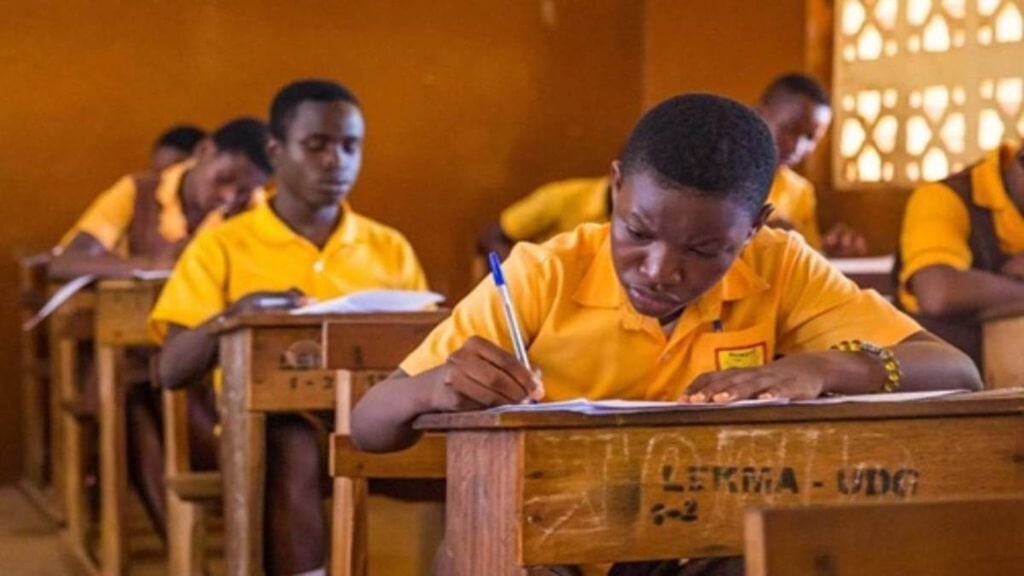
The Executive Secretary of Africa Education Watch, Kofi Asare, has welcomed plans by government to allow Basic Education Certificate Examination (BECE) candidates complete their selection of schools after the results are released.
According to him, the move would significantly improve decision-making among candidates and reduce the persistent pressure on top-tier schools.
Speaking on the issue in an interview on TV3's NewsCentral, Thursday, April 2, Mr. Asare noted that enabling candidates to make their school choices based on their actual raw scores would lead to more realistic and informed choice of school.
“We believe that once candidates have the opportunity to complete their school selection process with knowledge of their raw scores, they will make more realistic choices rather than selecting schools they know they do not meet the cut-off points,” he said.
He explained that following an analysis of the Computerised School Selection Placement System (CSSPS) in 2023, Africa Education Watch had earlier identified lack of adequate information as a major flaw for candidates to make an informed choice about the school to select.
Mr. Asare pointed out that many candidates previously selected schools without knowing their performance, leading to a disproportionate demand for Category A schools and complicating the placement process.
He described the proposed reform as "one step forward” in addressing long-standing challenges within the CSSPS, expressing optimism that it would enhance fairness and transparency in school placements.
"It will enable candidates make much more realistic choices than be selecting schools that they know they do not meet the cut-off point, so that is one step forward," he added.
Source: 3news.com | |
|
|
|
Eduwatch's Annual Policy Monitoring
|  | |
|
On Monday February 16, Eduwatch, with support from Oxfam, commenced its 2026 Annual Education Policy Monitoring activity, aimed at assessing implementation progress and emerging challenges in major basic education policies and interventions announced and budgeted under the 2025 Education Budget. The monitoring exercise also sought to generate evidence to support improved education service delivery, strengthen policy accountability, advance equity, and enhance the effective use of public resources across Ghana’s education sector.
The activity tracked the implementation of selected basic education policies and interventions in 10 sampled districts across rural and urban Ghana, including interventions financed through the District Assemblies Common Fund, GETFund, and the Consolidated Fund. Policy Monitors were deployed to engage District Education Officials, school leadership, students, local governments, and community stakeholders.
The sampled districts were Tatale Sanguli, Bongo, Nabdam, Zabzugu, Adentan, Ga East, Ga West, Ledzokuku, Nkwanta South and La-Nkwantanang Madina.
Following the district and school-level monitoring, Eduwatch will convene a national stakeholder engagement to discuss outcomes.
© Africa Education Watch | |
|
|
|
Africa Education Watch: Ghana’s Teacher Crisis Is A Distribution Problem, Not A Shortage — Kofi Asare
| | |
|
The Executive Director of Africa Education Watch, Kofi Asare, has argued that Ghana’s ongoing teacher crisis is driven more by poor distribution and systemic inefficiencies than an absolute shortage of trained teachers.
Speaking on the Asaase Breakfast Show on Wednesday (15 April), he said available data shows significant imbalances in teacher deployment across the country, with some districts overstaffed while others face severe shortages.
He cited examples where certain urban centres concentrate a disproportionate number of teachers, while deprived areas continue to struggle with classroom shortages. According to him, this reflects a “distributive efficiency challenge” within the education system.
Asare noted that Ghana has tens of thousands of trained but unemployed or unposted teachers, even as thousands of classrooms remain without instructors, particularly at the kindergarten and primary levels.
He argued that the problem is compounded by limited transparency in deployment data, which restricts civil society oversight and accountability in the posting process.
The education policy analyst further suggested that political and institutional interference has distorted teacher postings over the years, contributing to uneven staffing across districts.
He called for the publication of teacher deployment quotas at district level to allow monitoring by civil society organisations and the media, adding that this would improve accountability and fairness in distribution.
Source: asaaseradio.com | |
|
|
|
Eduwatch Engages GES Leadership On Findings From 1st Quarter Policy Monitoring
|  | |
|
On Monday, March 30, Eduwatch met with the Management of the Ghana Education Service (GES) for an extensive policy debriefing session on preliminary findings from its Policy Monitoring, as part of its stakeholder engagement efforts.
The Eduwatch delegation, led by its Executive Director, Kofi Asare, presented key findings from the Monitoring which spanned 10 purposively sampled districts across rural and urban Ghana.
Among the major issues raised were teacher rationalisation and equitable deployment, examination malpractice, the effectiveness of the school feeding programme, the administration of the capitation grant, and the availability of school furniture, particularly desks.
While the study acknowledged notable improvements, such as the more timely disbursement of capitation grants in recent periods and the promising impact of the sanitary pad initiative in promoting inclusive education, it also identified some gaps. These include persistent desk deficits in some schools and ongoing concerns regarding examination malpractice, both of which require targeted and sustained intervention.
Management of GES expressed appreciation for the insights provided and reaffirmed its commitment to deepening collaboration with civil society organisations to address identified gaps and improve educational outcomes nationwide.
© Africa Education Watch | |
|
|
|
Eduwatch Press Briefing On 2026 First Quarter Education Policy Monitoring Activity
|  | |
|
On Tuesday April 14 at its Country Office in Legon, Eduwatch held a Press Engagement on the back of its first quarter Policy Monitoring Activity. Cognizant of an approximately GHC 42 billion cedis allocation to financing key government interventions in the education sector in 2025, the engagement sought to present findings from district- and national-level Education Policy Monitoring conducted in February 2026 to assess the implementation of selected education policies and interventions.
The aim was to identify operational bottlenecks, equity gaps, and opportunities for improvement. The policies monitored included the Free Sanitary Pads initiative, Basic school infrastructure, Textbooks, Desks, School Feeding Programme, Teacher Deployment, Capitation Grants, and the National Apprenticeship Programme among others.
The full briefing is accessible via the link below:
https://africaeducationwatch.org/publication/eduwatch-2026-first-quarter-education-policy-monitoring-activity
© Africa Education Watch | |
|
|
|
|


